
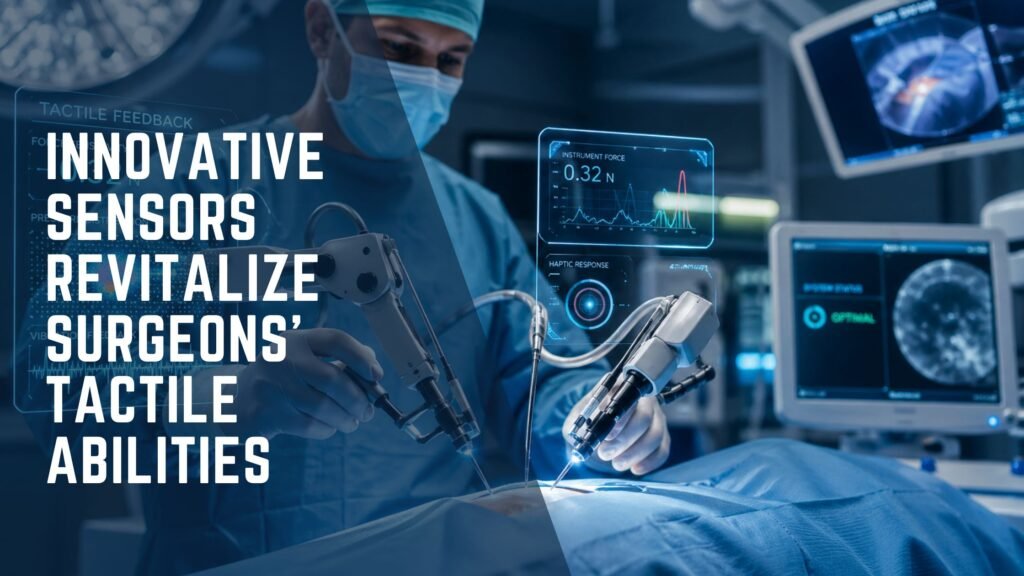
Breakthrough in Surgical Technology: Enhancing Surgeons’ Tactile Feedback
In a significant advancement for minimally invasive surgical procedures, researchers at New York University Abu Dhabi (NYUAD) have unveiled a novel technology that could revolutionize the field. The development involves the creation of soft, flexible sensors aimed at restoring the tactile feedback that surgeons lose during keyhole surgeries.
Research Findings Published in Microsystems & Nanoengineering
The findings, detailed in the scientific journal Microsystems & Nanoengineering, highlight a collaborative effort led by Mohammad A. Qasaimeh, an Associate Professor specializing in both Mechanical Engineering and Bioengineering at NYU Abu Dhabi. The team has engineered multichannel soft sensors capable of detecting a broad spectrum of forces from subtle touches to more forceful grips in real time.
Technical Specifications: A Blend of Soft Silicone and Liquid Metal
Crafted from pliable silicone, these sensors incorporate minute channels filled with liquid metal. The design enables the channels to deform under pressure, allowing the sensors to accurately gauge the force exerted. This technological innovation marks a significant step forward in making surgical instruments smarter and safer by providing real-time feedback that was previously unachievable.
Application in Minimally Invasive Surgery
To demonstrate the practical utility of this innovation, the team incorporated the sensors into a laparoscopic grasper, a common tool in minimally invasive surgeries. The placement was strategic: one sensor was located on the handle to assess the force applied by the surgeon, while another sensor was positioned on the tool’s jaw to evaluate its interaction with bodily tissues.
Professor Mohammad A. Qasaimeh commented on the significance of the development: “Minimally invasive surgery offers numerous benefits to patients, yet it inherently limits the surgeon’s sense of touch. Our work focuses on developing soft sensors that can measure a wide array of forces, providing crucial sensory feedback and facilitating safer, more efficient surgical procedures.”
Collaborative Efforts and Future Applications
Wael Othman, the first author of the study and an Assistant Professor at Khalifa University, emphasized the sensors’ dual objectives of sensitivity and practicality in real surgical settings. “Our design enables the measurement of both subtle and strong forces within a compact device, strategically positioning sensors where they are most effective on surgical instruments,” he stated.
While the immediate application is in surgical environments, the technology’s potential extends far beyond. These sensors could also be integrated into robotics, wearable technology, and other systems that demand precise force measurement, opening new avenues for innovation in various fields.
Implications for the Future of Medical Technology
The introduction of these sensors could significantly influence the future landscape of medical technology. By enhancing a surgeon’s tactile feedback, the sensors not only promise to improve the precision and safety of surgical procedures but also pave the way for future innovations in medical device technology.
As research continues to evolve, the integration of such advanced technologies into medical practice will likely become more prevalent, offering enhanced capabilities and outcomes in patient care.