
UAE Announces Fuel Price Adjustments for August 2026
In a recent announcement, the UAE Fuel Price Committee has revealed new fuel prices for August 2026, reflecting a slight increase in costs for gasoline and diesel. This adjustment is aligned with global market trends and aims to maintain a balance with international energy price fluctuations.
Details of the Price Increases
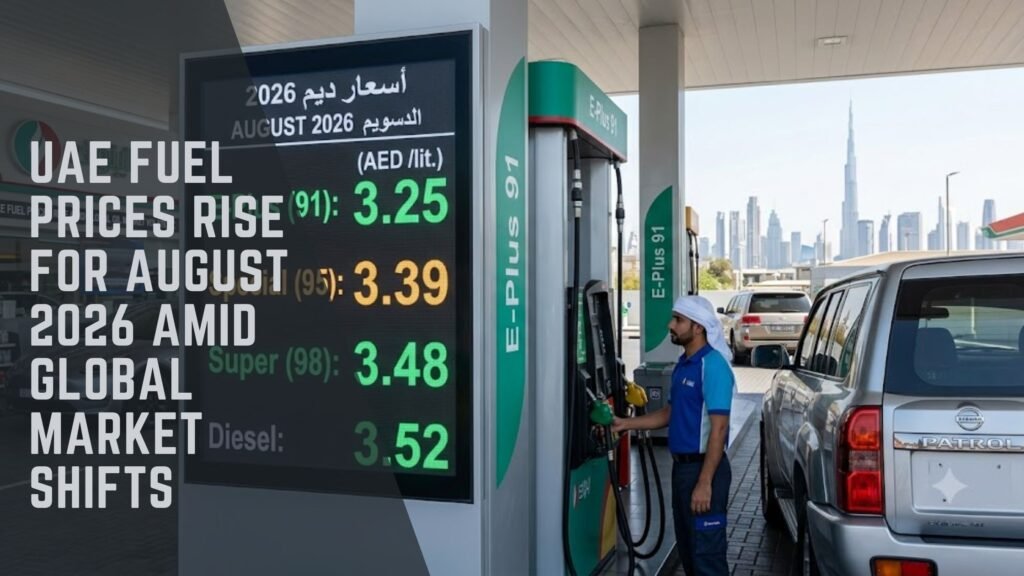
The revised fuel prices for August are as follows: Super 98 will now cost AED 3.60 per litre, representing an increase from the previous month’s price of AED 3.40. Special 95 is set at AED 3.49 per litre, up from AED 3.29, while E-Plus 91 is priced at AED 3.41 per litre, compared to July’s AED 3.21. Diesel prices have also seen a rise, now at AED 3.80 per litre from AED 3.60 in July.
Monthly Pricing Mechanism
The UAE employs a monthly pricing mechanism to determine fuel costs, which is based on a flexible and transparent system. According to the Fuel Price Committee, this system is designed to keep pace with global energy price changes in a balanced manner, ensuring that local prices are responsive to international market dynamics.
Impact on Consumers and Businesses
The increase in fuel prices has significant implications for both consumers and businesses across the UAE. For individuals, the rise in gasoline prices may lead to higher transportation costs, impacting daily commutes and travel expenses. For businesses, particularly those reliant on logistics and transportation, the hike could result in increased operational costs, potentially affecting pricing strategies and profit margins.
Global Market Influence
The adjustments in UAE fuel prices come amidst broader shifts in the global energy market. Factors such as international oil supply constraints, geopolitical tensions, and fluctuating demand have contributed to the current pricing trends. The UAE’s proactive approach in adjusting local prices reflects its commitment to maintaining economic stability while aligning with international market conditions.
Future Outlook
As the global energy landscape continues to evolve, the UAE will likely continue its practice of monthly fuel price assessments. This strategy not only ensures alignment with global market changes but also provides predictability and transparency for consumers and businesses alike. Stakeholders across the energy sector will be closely monitoring these developments, anticipating further adjustments in response to future market shifts.
In conclusion, the UAE’s decision to increase fuel prices for August 2026 underscores the interconnectedness of local and global markets. As the nation navigates these changes, its flexible pricing mechanism will remain a critical tool in managing economic impacts and sustaining growth.