
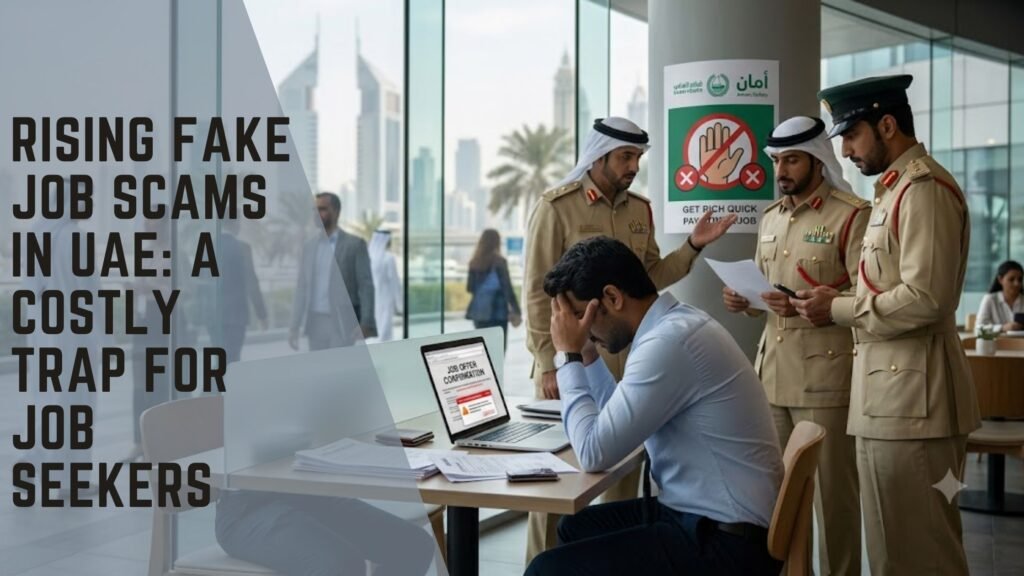
Dubai’s job market continues to grapple with the menace of fake job scams, which persistently ensnare unsuspecting job seekers despite extensive awareness efforts. The sophistication of these scams has increased, making them hard to detect and causing significant financial losses.
Scams Evolving Amidst Awareness
Experts in the industry, alongside legal professionals and those who have fallen prey, highlight how recruitment scams have adapted to evade detection. These scams often mimic legitimate hiring processes, complete with professional websites, social media presence, and even interviews conducted through AI-powered communications, blurring the line between authenticity and deceit.
While awareness campaigns on fake job offers have been active in the UAE for over 15 years, scammers have consistently updated their methods to outsmart informed individuals. Victims now often include those aware of the risks but still fall into well-crafted traps due to the convincing nature of these scams.
Psychological Exploitation
According to psychological and family counsellor Hiyam Abu Mashal, these fraudsters play on emotional vulnerabilities rather than just exploiting a lack of information. The intense need for employment, prolonged job searches, and financial pressures often dull the caution of job seekers, especially when an offer appears promising and professional.
Abu Mashal added that scammers build trust over time, causing victims to overlook warning signs. This behavior is linked to the ‘sunk cost fallacy’, where individuals continue investing in a process due to the resources already spent.
Financial Losses and Emotional Impact
Fatima Al Rahma, a victim, encountered a seemingly legitimate job advertisement on social media. Despite being aware of fraud warnings, the recruitment process appeared organized, requiring three payments of AED2,000. However, after the first payment, AED6,000 was withdrawn using a verification code, and all communication ceased, revealing the scam.
Another victim, Hanan Al Bahri, described losing AED20,000 to a fraudulent offer. The professional appearance of the hiring process misled her until she discovered that the promised job was non-existent upon her arrival in the country. The experience left her with not only financial but also severe emotional repercussions.
Warning Signs
Sumit Pant, Head of E-Care at Task Recruitment, identified several red flags indicative of job scams, such as promises of immediate employment, unrealistically high salaries, quick hiring decisions, and requests for money. Legitimate recruitment firms in the UAE, he emphasized, do not charge fees to job seekers.
Legal Implications
Ali Al Hammadi, a legal expert, stressed that the consequences of engaging with fake jobs extend beyond financial losses. Under UAE labour law, charging employees recruitment fees is illegal. While victims are not automatically liable, legal risks arise if they are found knowingly participating in fraudulent activities.
Al Hammadi urged caution against allowing personal bank accounts to be used for transactions requested by unknown parties, as this could lead to legal scrutiny if linked to illicit activities.
Verification: A Key Defense
The Ministry of Human Resources and Emiratisation (MOHRE) advises job seekers to verify employment offers through their official channels. MOHRE also cautions against sharing personal information or responding to requests for money under the guise of completing recruitment procedures.
Similarly, Dubai Police have issued warnings against accepting part-time or remote job offers promoted through social media, which often lead to involvement in fraudulent schemes.
Protective Measures
Experts suggest adhering to three fundamental rules: never pay for a job, verify all offers through official channels, and avoid sharing sensitive information without confirming the legitimacy of an employer. While awareness is crucial, thorough verification remains the ultimate safeguard against scams.