
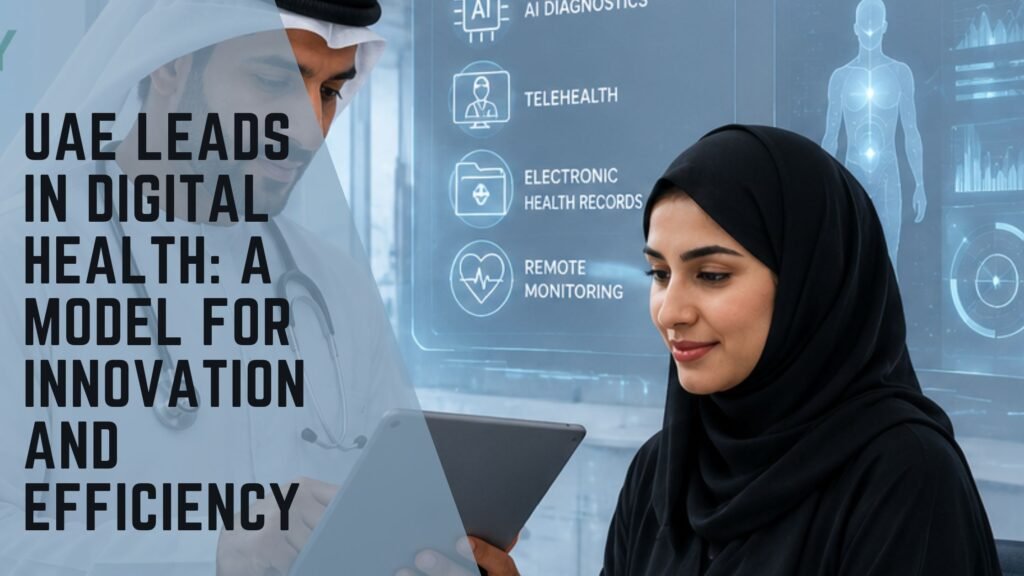
UAE’s Digital Health Leadership: A New Era in Healthcare
Abu Dhabi is at the forefront of digital health innovation, establishing itself as a leader in this transformative sector. The United Arab Emirates (UAE) has developed a robust framework to integrate digital health solutions, making it a cornerstone of its healthcare infrastructure. This forward-thinking approach is reshaping service delivery, elevating care quality, and optimizing efficiency across the nation.
Advanced Digital Infrastructure Powering Progress
The UAE’s digital health advancements are underpinned by a sophisticated digital ecosystem. This includes cutting-edge technologies and a national framework that facilitates seamless health data exchange. By utilizing these tools, the UAE enhances medical service efficiency, accelerates treatment access, and fosters an innovative healthcare model that is both data-driven and patient-centric.
Technological Integration Across Healthcare Delivery
Across various stages of healthcare delivery, the UAE deploys state-of-the-art technologies. From streamlined appointment bookings to comprehensive telemedicine consultations, the country’s digital health ecosystem ensures continuity and quality of care. Electronic health records and artificial intelligence applications are pivotal in supporting diagnostics, analyzing medical data, and aiding clinical decisions, thereby continually improving healthcare outcomes and operational practices.
National Platforms: Riayati and Wareed
The UAE’s strategic initiatives include the launch of the Riayati platform, a unified national medical record system managed by the Ministry of Health and Prevention. This platform permits secure health data exchanges among medical facilities nationwide. It ensures continuity of care by providing healthcare providers immediate access to patient histories, reducing redundancies, and enhancing overall service efficiency.
Another critical component is the Wareed system, which manages electronic medical records and clinical operations within Emirates Health Services (EHS) hospitals. Integrated with the Riayati platform, Wareed facilitates seamless data movement among healthcare entities while maintaining stringent quality and privacy standards.
Local Innovations: Malaffi and NABIDH
Local initiatives such as Abu Dhabi’s Malaffi platform and Dubai’s NABIDH enhance the national framework by offering comprehensive health information exchanges. These platforms connect with Riayati, forming an extensive network that supports continuous care and informed clinical decision-making.
The integration of these platforms has created an interconnected electronic health record network that boosts the efficiency of healthcare services and reinforces data-driven decisions, vital for modern medical practices.
Smart Healthcare Services and Telemedicine Expansion
In its drive for digital transformation, the UAE has expanded into smart healthcare services. These electronic services include appointment scheduling, prescription management, sick leave issuance, and access to personal health data. This digital service offering not only enhances patient experiences but also streamlines service delivery, improving care quality across the board.
Telemedicine has become a significant aspect of the UAE’s healthcare framework, allowing patients to access medical consultations and follow-up care remotely. This approach maintains care continuity, optimizes resource utilization, and expands healthcare access.
The Role of Artificial Intelligence in Healthcare
Artificial intelligence plays a pivotal role in the UAE’s healthcare transformation. It aids in analyzing medical images, detecting diseases early, predicting health complications, and processing vast datasets. These capabilities enhance diagnostic precision and support personalized medicine, aligning healthcare services with individual patient needs.
Conclusion: Towards Vision 2031
By 2026, the UAE had established a fully integrated digital health ecosystem, characterized by interconnected health data, electronic medical records, and advanced technologies like AI and telemedicine. The integration of platforms such as Riayati, Malaffi, and NABIDH, along with the Wareed system, significantly enhances data exchange, supports data-driven decisions, and boosts healthcare system efficiency. These advancements are crucial as the UAE progresses towards achieving the objectives of the “We the UAE 2031” Vision, setting a benchmark for global digital health initiatives.