
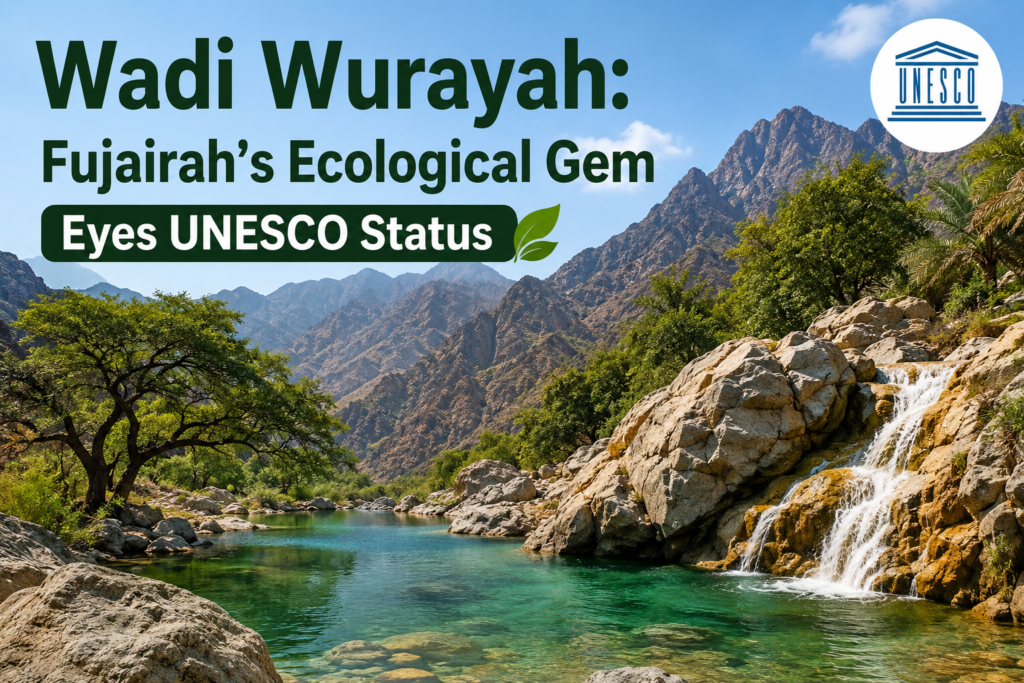
Wadi Wurayah: A Natural Marvel in the Hajar Mountains
Nestled within the rugged Hajar Mountains of Fujairah, approximately 45 kilometers from the bustling city, lies Wadi Wurayah, a natural sanctuary that stands as a testament to the United Arab Emirates’ dedication to conserving its rich environmental heritage. This area is not merely a scenic spot but a thriving ecological system, underscored by its diverse biodiversity and geological formations.
A Biodiversity Hotspot
Spanning an impressive 220 square kilometers, Wadi Wurayah boasts a remarkable array of over 1,099 species. This includes 216 types of plants, 114 bird species, 20 mammals, and 30 species of reptiles and amphibians. Among these are rare and endangered animals like the elusive Arabian Tahr and Blanford’s Fox. The presence of such diverse wildlife highlights the site’s ecological significance in the region.
Unique Geological and Botanical Features
The wadi is renowned for its permanent waterfall and perennial springs, which have offered sustenance in this arid landscape for generations. These water sources contribute to the vibrant ecosystem, supporting rare plant species like the wild orchid Epipactis veratrifolia, the only one of its kind in the UAE. The unique interplay of geological formations and water bodies creates an exceptional natural laboratory for scientific inquiry.
Scientific Research and Discoveries
Wadi Wurayah has become a pivotal site for environmental research, facilitating the rediscovery and documentation of rare species. These studies not only enhance our understanding of biodiversity but also underscore the wadi’s role as a living laboratory, crucial for ecological and biological research in the Arabian Peninsula.
Cultural and Historical Significance
Beyond its ecological importance, Wadi Wurayah also holds deep cultural and historical value. It has been intertwined with local communities for centuries and is located near significant historical sites, such as Al Bidyah Mosque, the oldest mosque in the UAE. This intertwining of nature and culture highlights the harmonious relationship between the region’s people and their environment.
Pathway to UNESCO World Heritage Recognition
The UAE has taken a significant step by nominating Wadi Wurayah for inclusion on the UNESCO World Heritage List. The nomination emphasizes the site’s representation of ongoing ecological and biological processes of global importance, particularly its mountain desert ecosystem, which has endured over millennia.
This nomination builds on Wadi Wurayah’s previous accolades, having been designated a nature reserve in 2009, recognized as a wetland of international importance under the Ramsar Convention in 2010, and declared the UAE’s first national park in 2013. In 2018, it gained further recognition as a Biosphere Reserve under UNESCO’s Man and the Biosphere Programme, underscoring its global significance.
Continued Efforts for Global Recognition
The Fujairah Environment Authority is actively involved in advocating for Wadi Wurayah’s inscription on the World Heritage List. Participating in the UNESCO World Heritage Committee session in Busan, South Korea, in coordination with national authorities, reflects the UAE’s commitment to enhancing international awareness and recognition of its natural sites. Such efforts are crucial in positioning Wadi Wurayah as a site of Outstanding Universal Value.