


Table of Contents
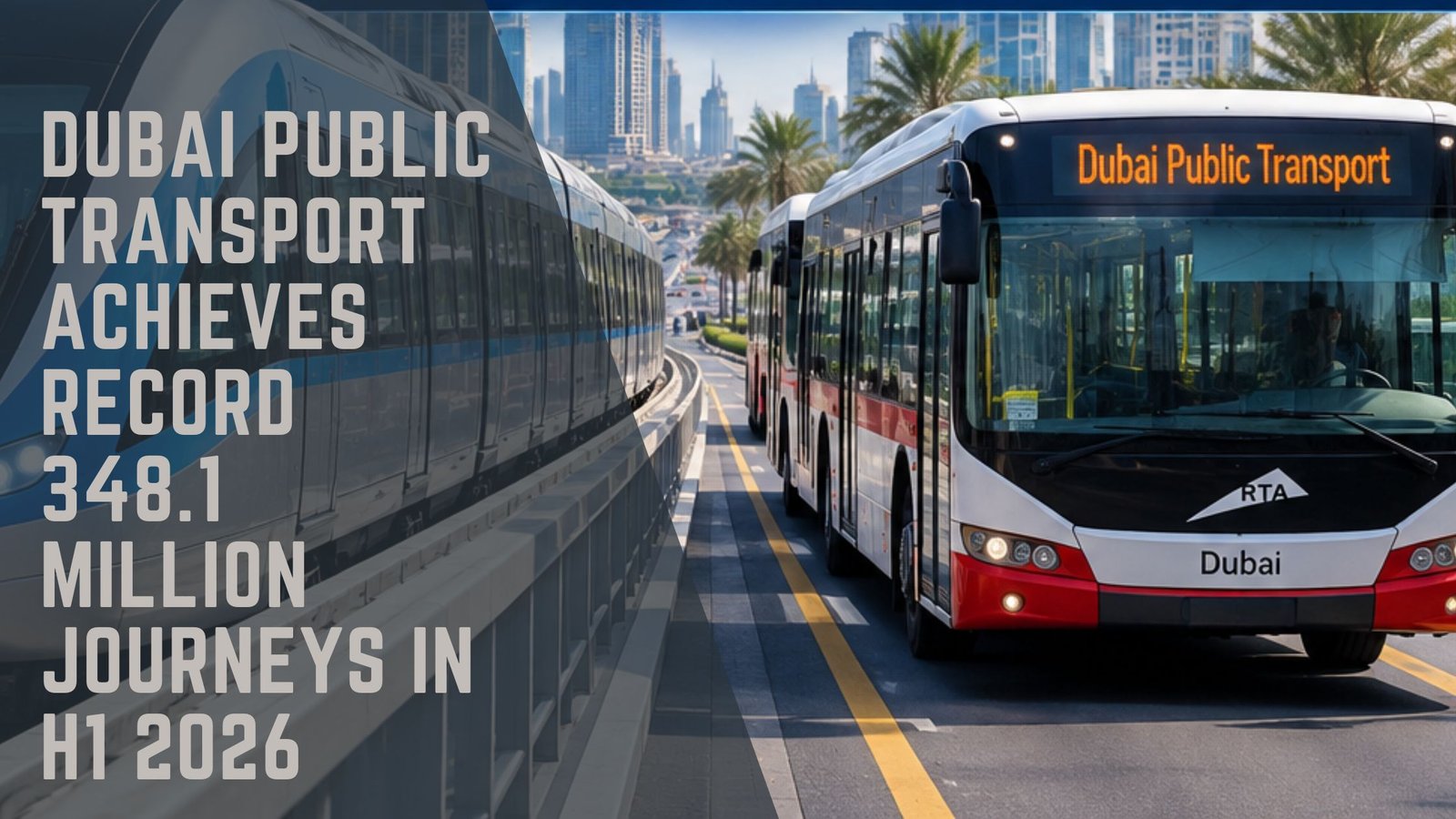
In a remarkable development for urban mobility, Dubai’s Roads and Transport Authority (RTA) has reported that public transport, taxis, and shared mobility services collectively facilitated approximately 348.1 million passenger journeys in the first half of 2026. This equates to an impressive average of nearly 1.9 million users per day.
Integrated Transport System Success
The comprehensive transport network, including the Dubai Metro, Dubai Tram, public buses, marine transport, and various shared mobility services, has demonstrated significant usage. A noteworthy 5.7 million passengers also utilized luxury transport options such as limousines during this period.
Leadership Insights
Mattar Al Tayer, Director-General and Chairman of the Board of Executive Directors of the RTA, highlighted the milestones achieved as a testament to Dubai’s vision of developing a sustainable, innovative, and interconnected transport system. This approach has fortified public trust and fostered a culture of sustainable commuting among both residents and visitors in Dubai.
Growth in Public Transport Usage
Al Tayer emphasized that the share of trips conducted via public transport and shared mobility increased from a modest 6% in 2006 to a substantial 22.3% by 2025. This growth reflects the success of strategic investments and progressive policies aimed at enhancing life quality and boosting Dubai’s global standing.
Strategic Projects and Future Plans
The RTA is advancing several ambitious projects, including the development of the 30-kilometre Blue Line for the Dubai Metro. This new line will serve nine key districts and accommodate an estimated one million residents as part of the Dubai Urban Plan 2040.
Further, the 42-kilometre Gold Line has received approval, with an investment of approximately AED34 billion. It will feature 18 stations and will be Dubai’s first fully integrated underground metro line, creating connections with the existing Red and Green lines and the Etihad Rail.
Fleet Expansion and Environmental Commitment
The phased introduction of 637 new buses, including 40 electric buses adhering to Euro 6 low-emission standards, is underway. This expansion aligns with Dubai’s goal to transition its entire public bus fleet to electric and hydrogen power by 2050. In addition, the RTA is pioneering self-driving taxi operations and preparing to launch commercial air taxi services later this year, alongside the ongoing Dubai Loop project.
Ridership Statistics
During the first half of 2026, the Dubai Metro emerged as the leading mode of transport, accounting for 39.2% of total commuter journeys. Taxis followed closely with 25.5%, while public buses represented 24.4%. Together, these three modes comprised approximately 89% of all passenger journeys.
January 2026 saw the peak in ridership with 73.4 million passengers recorded, whereas the other months experienced a range between 49 million to 66 million passengers. The Red and Green lines of the Dubai Metro alone registered around 136.5 million passengers during this period.
Station Popularity
Among the interchange stations, BurJuman Station received the highest footfall with 8.4 million passengers, trailed by Union Station with 6.5 million. On the Red Line, Al Rigga Station was the busiest with 6.4 million passengers, while on the Green Line, Sharaf DG Station topped the list with 4.9 million passengers.
Comprehensive Mobility Solutions
The Dubai Tram transported 3.8 million passengers, and public buses carried 85.1 million. Marine transport services were utilized by 8.1 million passengers. Shared mobility, including ride-hailing and hourly rentals, served 25.7 million passengers, while taxis recorded a substantial 88.9 million passengers.
The RTA aims to further integrate public transport, shared mobility, pedestrian, and cycling networks with smart traffic systems. This effort seeks to elevate the share of public transport to 25% by 2030, aligning with the objectives outlined in the Dubai Urban Plan 2040 and the Dubai Economic Agenda D33.
