
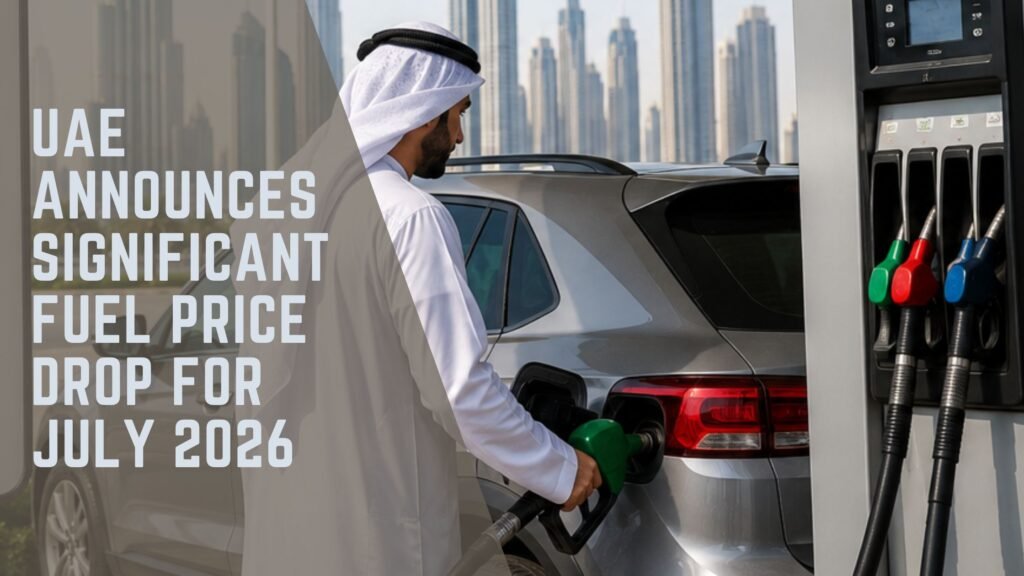
UAE Fuel Price Committee Lowers Rates for July 2026
The United Arab Emirates’ Fuel Price Committee has unveiled new, reduced fuel prices for July 2026, marking a significant decrease from June’s figures. This decision comes as a response to fluctuations in the international energy markets, aiming to pass potential savings on to consumers and businesses.
Detailed Breakdown of New Fuel Prices
Effective from July 1, 2026, the approved fuel prices are as follows: Super 98 is priced at AED 3.40 per litre, marking a substantial decrease from AED 3.95 in June. Special 95 is now AED 3.29 per litre, down from AED 3.83. E-Plus 91 is reduced to AED 3.21 from AED 3.76, and Diesel now costs AED 3.60 per litre, a notable drop from AED 4.33.
Impact on the Transportation and Logistics Sectors
The reduction in fuel costs is anticipated to bring down operational expenses across various sectors, notably in transportation and logistics. These industries, heavily reliant on fuel for their daily operations, stand to benefit significantly. Lower fuel prices can lead to reduced freight costs, which may translate into cheaper goods and services for consumers.
Benefits for Motorists and Supply Chains
Motorists, too, will find relief in the decreased fuel prices, as it eases the financial burden of daily commutes and long journeys. Businesses that are part of extensive supply chains are likely to experience reduced transportation costs, potentially increasing profit margins and encouraging investment in other areas.
Global Market Influences
The decision to adjust fuel prices is largely influenced by trends in the global oil market. As prices for crude oil fluctuate due to geopolitical events, changes in supply and demand, and other economic factors, the UAE’s pricing strategy reflects these shifts to maintain competitiveness and economic stability.
Economic Implications of Fuel Price Adjustments
Adjusting fuel prices can have widespread economic implications. Lower fuel prices can boost consumer spending power, as individuals have more disposable income. This can positively affect the economy by increasing demand for other goods and services. However, it also means decreased revenues for the government from fuel taxes, which could impact public spending if not managed properly.
Future Outlook
While the current reduction is beneficial, the future of fuel prices remains uncertain. Factors such as advancements in alternative energy sources and international agreements on climate change could influence long-term pricing strategies. The UAE’s commitment to sustainable energy development might also play a role in future pricing decisions.